
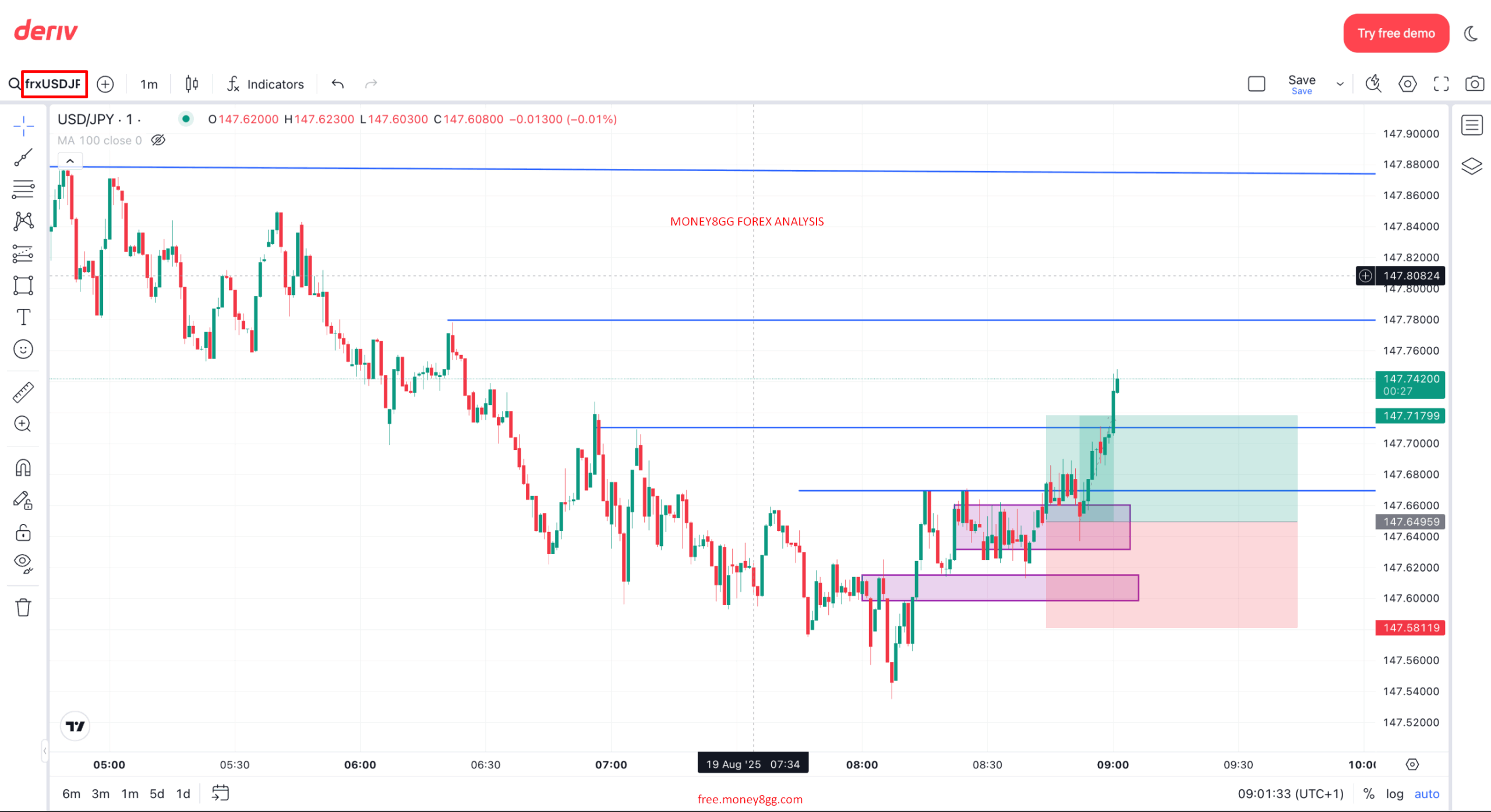

Grasping how currency pairs, pips, and lot sizes work is the foundation of profitable forex trading. This guide expands the basics with clear examples, formulas, and practical tips you can apply immediately on any platform.
You can start trading forex today by creating your account here.

Components of a Forex Pair
A forex pair quotes one currency against another:
- Base currency (first): the currency you buy or sell.
- Quote currency (second): how much of this you need to buy 1 unit of the base.
Example: EUR/USD = 1.0697 means 1 EUR costs 1.0697 USD.
- Buy (long) EUR/USD: buy euros, sell dollars.
- Sell (short) EUR/USD: sell euros, buy dollars.
Types of pairs
- Majors: Include USD; most liquid (EUR/USD, USD/JPY, GBP/USD, USD/CHF, AUD/USD, USD/CAD, NZD/USD).
- Minors (crosses): Don’t include USD (EUR/GBP, EUR/JPY, GBP/JPY).
- Exotics: One major + one emerging currency (USD/TRY, USD/ZAR). Expect wider spreads and sharper moves.
Reading a quote: Bid, ask, spread
- Bid: price you can sell at.
- Ask: price you can buy at.
- Spread = Ask − Bid: your immediate cost; tighter is cheaper.
The Importance of Pips (and Pipettes)
A pip (“percentage in point”) is the standard unit of price movement.
- Most pairs: 1 pip = 0.0001 (fourth decimal).
- JPY pairs: 1 pip = 0.01 (second decimal).
- Pipette: one-tenth of a pip (fifth decimal for most pairs; third for JPY).
Examples
- EUR/USD: 1.2050 → 1.2051 = +1 pip
- USD/JPY: 145.10 → 145.11 = +1 pip
Why it matters: pips let you measure price changes, estimate profit/loss, and size positions precisely.
Lot Sizes (Contract Sizes)
A lot is your trade size:
- Standard lot: 100,000 units of base currency
- Mini lot: 10,000 units
- Micro lot: 1,000 units
- Nano lot: 100 units
Smaller lots reduce exposure and help keep risk consistent while you learn.
How to Calculate Pip Value
1) When your account currency equals the quote currency
For EUR/USD in a USD account, pip values are straightforward:
Per standard lot (100,000): ≈ $10 per pip
Per mini lot (10,000):      ≈ $1 per pip
Per micro lot (1,000):      ≈ $0.10 per pip
2) For JPY pairs (quote in JPY), then convert to your account currency
Formula (in account currency, USD example):
Pip value = (Pip size / Price) × Lot size
USD/JPY at 145.00, standard lot
Pip size = 0.01 → Pip value ≈ (0.01 / 145.00) × 100,000 ≈ $6.90 per pip
3) When your account currency ≠ quote currency (cross pairs)
First get pip value in the quote currency, then convert to your account currency using the current exchange rate.
GBP/CHF, USD account (illustrative):
Pip value in CHF = 0.0001 × 100,000 = 10 CHF per pip → convert CHF→USD at the live rate for your final pip value.
Position Sizing: Turn Risk Into a Number
Keep risk per trade consistent (e.g., 0.5–1% of account equity). Use:
Position size (lots) = Account risk ($)
                        / [Stop-loss (pips) × Pip value per lot ($)]
Example – EUR/USD (USD account)
- Account: $1,000, risk 1% = $10
- Stop-loss: 20 pips
- Pip value per micro: $0.10
Lots = $10 / (20 × $0.10) = $10 / $2 = 5 micro lots = 0.05 lots
Example – USD/JPY (USD account)
- Risk $10, stop 15 pips, pip value per micro ≈ $0.069
Lots ≈ $10 / (15 × $0.069) ≈ 9.6 micro ≈ 0.10 lots
The Relationship Between Lots and Pips (Profit/Loss)
Your P/L per pip scales with lot size. On EUR/USD (USD account):
- Standard lot: ~$10 per pip
- Mini lot: ~$1 per pip
- Micro lot: ~$0.10 per pip
A 25-pip move with 3 micro lots (0.03) ≈ 25 × $0.30 = $7.50 (before costs).
Practical Extras Most Beginners Miss
- Pipettes & fractional pricing: Many brokers quote to 5 decimals (or 3 for JPY). Your platform will show fractional-pip spreads and moves—great for precision.
- Swap/financing: Holding positions past rollover may debit/credit interest. Factor this into longer trades.
- Commission models: “Raw spread” accounts add a small commission; “standard” accounts wrap fees into a wider spread. Compare all-in cost (spread + commission).
- Volatility awareness: Pairs behave differently by session (London/NY more active; Asia often steadier). Adjust stop-loss and targets to volatility (e.g., ATR-based stops).
- News spikes: Major data (CPI, NFP, central-bank decisions) can widen spreads and cause slippage—consider standing aside or widening stops temporarily.
- Trade one or two majors first: Liquidity, tighter spreads, and plenty of analysis make learning easier.
Quick Reference
Lot & typical pip values (USD account)
| Lot size | Units | EUR/USD (per pip) | USD/JPY* (per pip @145) |
|---|---|---|---|
| Standard | 100,000 | ~$10.00 | ~$6.90 |
| Mini | 10,000 | ~$1.00 | ~$0.69 |
| Micro | 1,000 | ~$0.10 | ~$0.069 |
| Nano | 100 | ~$0.01 | ~$0.0069 |
*JPY pip = 0.01; convert JPY→USD at current price.
Common Mistakes to Avoid
- Oversizing positions relative to account and stop distance.
- Ignoring pip value conversions on non-USD quotes or cross pairs.
- Trading exotics without accounting for wider spreads and slippage.
- Skipping a written plan (entry, stop, target, invalidation).
- Moving stops emotionally instead of by rules.
Conclusion
Know your pair structure, pip math, and lot sizing before you click buy or sell. With consistent position sizing, disciplined risk (0.5–1% per trade), and awareness of spreads, swaps, and volatility, you’ll make clearer decisions and protect your capital as you advance.
About the Author
Bretton Gitonga is a trading educator and the founder of Money8gg. With years of hands-on experience trading binary options and forex on platforms including Deriv, Bretton built Money8gg to give everyday traders access to honest, practical financial education. His focus is on disciplined strategy, realistic risk management, and helping beginners avoid the costly mistakes he learned from firsthand.
Have a question? Contact Bretton here.