


1) Account & security
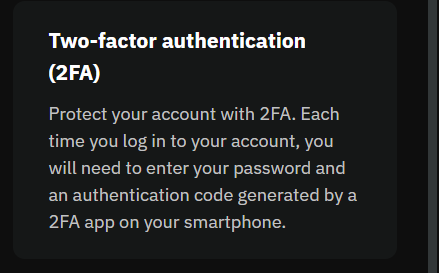
Use a separate Demo and Live account. Turn on 2FA, use a strong password manager, and log out on shared devices. Never share API tokens; if you automate, store keys in a secure vault and rotate them regularly. Bookmark the real Deriv URL—don’t click login links from email/DMs.
2) Platform setup
Trade on a stable browser (Chromium/chrome, current version). Disable auto-translate for tickets, and keep just the indicators you actually use—clutter causes mistakes. Check time zone (Africa/Nairobi, EAT) so session times and expiries line up. If your internet is spotty, have a mobile hotspot as a backup.
3) Learn the ticket (before money)
In DTrader, practice opening the ticket and confirming contract type (Rise/Fall, Higher/Lower, Digits), expiry, and stake. Know where Open positions, Statement/Journal, and Early sell (if available) live. Do 10–15 demo reps until you make zero misclicks.
4) Risk rules (simple, mechanical)
Stake 1–2% of balance per attempt. Daily stop: 3 losses in a row or 5 trades total, whichever comes first. Weekly pause: down 5–7% → review, don’t chase. No Martingale—binaries pay <100%, so doubling doesn’t recover properly and explodes risk.
5) Payout & breakeven (know your math)
If the quoted payout on Rise/Fall is ~80%, breakeven win-rate ≈ 55.56% (1 ÷ 1.8). Profitability comes from a real edge (timing + discipline), not bigger stakes. Track your win-rate, average payout, expectancy:EV per $1 = (win_rate × payout) − (loss_rate × 1)
6) Time & expiry
Pick one expiry (start with 5 minutes) and keep it constant while learning—apples-to-apples stats. Match windows to your market:
- FX on Deriv: test 10:00–13:00 and 16:00–19:00 EAT (avoid big news minutes).
- Synthetics: pick two calm daily windows (e.g., 13:00–15:00 and 20:00–22:00 EAT).
Spiky tape → wait for a pullback or skip the session.
7) Journal & review
After each trade, record: market, contract, expiry, reason, screenshot, result, did I follow the rule (Y/N), one lesson. Every 20–30 trades: compute win-rate, payout, expectancy, and rule-adherence. If adherence < 80–90%, fix discipline before tweaking the setup.
8) Demo → Live handoff
Stay on Demo until you complete 40–50 clean, rule-following trades with steady or improving expectancy. When you go live, keep the same market/contract/expiry/checklist and use the smallest stake. If you hit weekly limits or break rules, step back to demo, repair, return.

9) Operations & support
If something glitches (ticket freeze, quote delay), screenshot the ticket + time, note the trade ID, and contact support via official channels. Keep platform notifications on for maintenance windows.
10) Compliance
Regulations vary by country. Confirm what’s allowed where you live and follow KYC/withdrawal rules. Your content and trades are for education—not signals.
One-minute pre-trade checklist (print this)
Read the ticket out loud: Contract • Expiry • Stake.
Ask: Is my setup present? Is this my window?
Confirm: No Martingale. Size OK. Screenshot ready.
Breathe 10 seconds → click once → log the trade.
One-minute post-trade checklist
Log result + adherence. If 2 losses in a row: shrink size.
If 3 losses in a row or 5 trades done: end session.
Write one lesson you’ll apply next time.
11) Responsiveness (latency & execution)
Keep clicks crisp and tickets accurate.
- Connection: prefer wired/Ethernet or strong Wi-Fi close to the router; keep a mobile hotspot as backup.
- Browser hygiene: one trading tab, no heavy extensions, hardware acceleration on; clear cache weekly.
- Device load: close CPU-hungry apps (video calls, downloads).
- Pre-flight: open one tiny demo trade first to confirm ticket speed; if quotes feel sticky, don’t go live.
- Micro-timing: read the ticket aloud (Contract • Expiry • Stake), breathe 10s, click once. Avoid last-second entries on spiky tape.
12) Recent trends (market regime, not social buzz)
Trade the tape you have, not the tape you want.
- Regime check (60 seconds): are candles making higher highs/lows (trend) or ping-ponging (range)? Any fresh spike in the last 3–5 minutes?
- Quiet vs. spiky: in quiet drift, your simple pullback rule often behaves; after spikes, wait for two calm candles or skip the session.
- Your stats > headlines: tag each trade with “trend / range / post-spike.” Review 20–30 trades to see where your rule wins. Adjust time window or expiry—not everything at once.
13) Commissions & total cost
Know where costs live so edges aren’t imaginary.
- Binary options: cost is mostly in the payout (<100%)—that’s the house edge. Your breakeven win-rate rises as payout falls (≈ 55.56% at ~80% payout).
- Other fees: check for currency conversion, deposit/withdrawal, or inactivity fees; plan funding in your base currency to avoid FX creep.
- Ticket check: before clicking, glance at quoted payout and effective EV for your rule; if payout slips, your edge may vanish—skip low-payout periods.
14) Account management (capital, KYC, withdrawals)
Treat this like operations, not vibes.
- Segregate: Demo for practice, Live for proven rules. Keep trading funds separate from living money.
- KYC early: complete verification before you need a fast withdrawal.
- Sizing policy: 1–2% per trade; daily stop (3 losses or 5 trades), weekly pause (down 5–7%). No Martingale.
- Withdrawal routine: decide a cadence (e.g., weekly/biweekly). Many traders withdraw a portion of profits and leave working capital stable.
- Records: keep a simple sheet for deposits, withdrawals, fees, and monthly P&L—clarity beats memory.
Education only. Not financial advice. Trading involves risk; follow local regulations and practice on a demo account before going live.
About the Author
Bretton Gitonga is a trading educator and the founder of Money8gg. With years of hands-on experience trading binary options and forex on platforms including Deriv, Bretton built Money8gg to give everyday traders access to honest, practical financial education. His focus is on disciplined strategy, realistic risk management, and helping beginners avoid the costly mistakes he learned from firsthand.
Have a question? Contact Bretton here.