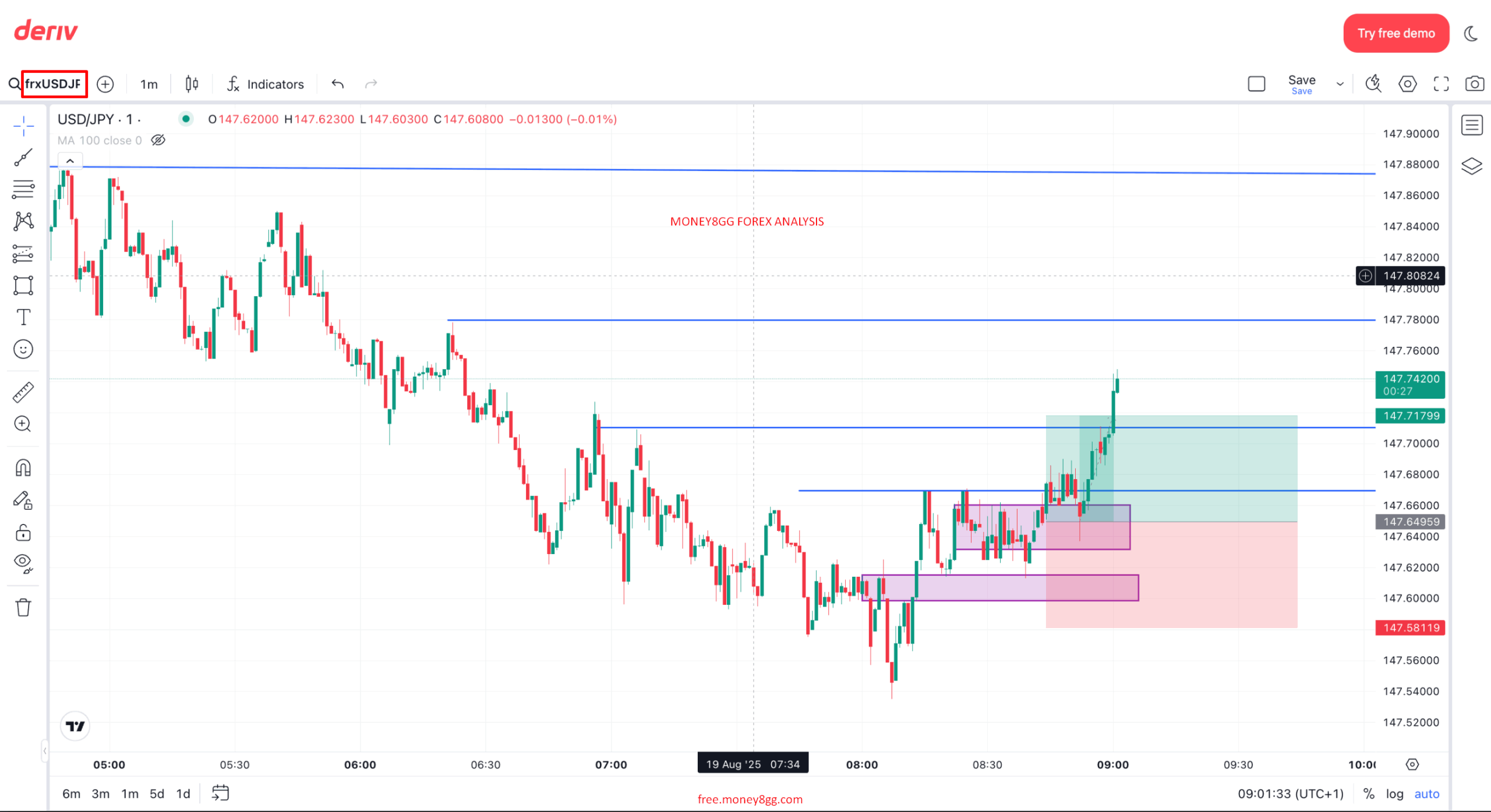

What Is the Forex (FX) Market?
The foreign exchange (forex/FX) market is where currencies are bought and sold. It’s the world’s largest and most liquid financial market, averaging about $7.5 trillion in daily turnover.
Unlike a single centralized exchange, forex runs on a decentralized network of banks, brokers, and institutions across time zones, enabling 24 hours a day, 5 days a week trading. Activity follows the major global sessions—Sydney, Tokyo, London, and New York—with volatility often highest when sessions overlap (especially London–New York).
Why it matters: Currency exchange powers global trade and investment. If a US firm pays a Chinese supplier, it may sell USD to buy CNY—transactions that happen through the FX market.
How Forex Trading Works
You trade currency pairs (e.g., EUR/USD, GBP/JPY). The first currency is the base; the second is the quote.
- If you buy EUR/USD, you’re betting the euro will strengthen against the dollar.
- If you sell EUR/USD, you’re betting the euro will weaken against the dollar.
Your profit/loss depends on the price change between entry and exit, measured in pips (the standard unit of price movement).
Key Terms You’ll See Everywhere
- Pip: For most pairs, 1 pip = 0.0001 change in price (fourth decimal place). Example: 1.1000 → 1.1001 = +1 pip.
- Lot sizes:
- Standard lot: 100,000 units
- Mini lot: 10,000 units
- Micro lot: 1,000 units (great for beginners to size risk precisely).
- Leverage & margin: Leverage lets you control a larger position with a smaller deposit (margin). It magnifies gains and losses; it doesn’t change pip value, but it does change how fast your account equity moves. Use it carefully.
- Spread: The difference between bid (sell) and ask (buy) prices; tighter spreads generally reduce trading costs.
Forex Market Hours & Best Times to Trade
The market typically opens Sunday evening UTC (Sydney) and closes Friday evening UTC (New York). Liquidity and volatility vary by session:
- Tokyo/Asian session: Often steadier moves; JPY and AUD pairs get attention.
- London/European session: Highest liquidity; big moves in EUR, GBP, and cross-pairs.
- New York/North American session: Strong liquidity; the London–New York overlap is often the most active window.
If you value movement and tight spreads, consider the London–New York overlap. If you prefer quieter conditions, look to Asian session hours.
Why Trade Forex? (Benefits)
- High liquidity: Enter/exit trades quickly, with tight spreads on major pairs.
- 24/5 access: Trade around your schedule across global sessions.
- Diversification: FX exposure can complement stocks, crypto, and commodities.
- Hedging: Manage currency risk (e.g., short EUR/USD to offset euro exposure).
Smart Risk Management (Non-negotiable)
Successful traders obsess over risk before returns:
- Risk per trade: Many beginners cap risk at 0.5–1% of account equity.
- Position sizing: Use lot sizes that fit your stop-loss distance and risk budget. Micro lots make this easier.
- Leverage discipline: Choose conservative leverage so a normal pullback doesn’t wipe out your account.
- Plan the trade: Define entry, stop, and take-profit before clicking buy/sell.
- Journal everything: Track setups, emotions, and outcomes to improve.
Step-by-Step: How to Start Trading Forex on Deriv
- Open a Deriv account & demo first. Practice strategies risk-free and learn the platform tools.
- Pick your platform:
- Deriv MT5 – all-in-one CFD platform with indicators and 24/7 access to Derived Indices alongside forex.
- Deriv cTrader – an intuitive CFD and copy-trading experience so you can mirror strategies (manage risk carefully).
- Deriv Trader – user-friendly options platform; start with small stakes and clear durations.
- Deriv Bot – build and deploy rules-based automated strategies (test thoroughly on demo).
- Choose a pair and a method:
- Technical analysis: Support/resistance, trends, breakouts, indicators.
- Fundamental analysis: Rates, inflation, jobs, GDP, central-bank policy.
- Size the position & set a stop-loss: Base it on volatility (e.g., ATR) and your fixed % risk.
- Execute with a plan: Enter, manage the trade, record the result, and review.
Example: Pip, Lot, and Risk in One Snapshot
- Account: $1,000
- Risk per trade: 1% = $10
- Stop-loss distance: 20 pips on EUR/USD
- With pip value $0.10 per pip, your position should be 0.01 lots (micro) because 20 pips × $0.10 = $2 risk per micro lot; to reach $10 risk, you’d use 5 micro lots (0.05 lots). (Adjust for the pair/quote currency.)
Tip: Re-check pip values for JPY pairs (two decimal places) and for pairs where USD isn’t the quote currency.
Proven Beginner Tips
- Master one or two pairs before adding more.
- Trade your timeframe: If you’re busy, consider 4H/Daily charts.
- Avoid news whipsaws until you’re comfortable with volatility.
- Keep costs tight: Trade liquid major pairs during active sessions.
FAQs
Is forex trading good for beginners?
Yes—if you learn the basics, practice on demo, and cap risk per trade. Micro lots help you start small.
What’s the best time to trade forex?
Many traders prefer the London–New York overlap for liquidity and tighter spreads; quieter markets often occur in the Asian session.
How much money do I need to start?
There’s no universal minimum, but start with an amount that lets you risk 0.5–1% per trade while still placing logical stops (micro lots are helpful).
Is the market really open 24/5?
Yes. FX runs continuously from Sunday evening to Friday evening (UTC/ET equivalents) across global sessions.
Conclusion
The forex market is a dynamic, always-on venue that underpins global commerce. With deep liquidity, 24/5 access, and a wide choice of pairs and platforms on Deriv—including Deriv MT5, Deriv cTrader, Deriv Trader, and Deriv Bot—you have everything you need to learn on demo, apply disciplined risk management, and trade your plan. Start small, stay consistent, and keep improving.
About the Author
Bretton Gitonga is a trading educator and the founder of Money8gg. With years of hands-on experience trading binary options and forex on platforms including Deriv, Bretton built Money8gg to give everyday traders access to honest, practical financial education. His focus is on disciplined strategy, realistic risk management, and helping beginners avoid the costly mistakes he learned from firsthand.
Have a question? Contact Bretton here.