


Finding the Loop
Turning knowledge into profit isn’t about finding a magic indicator; it’s about running a tight loop you can repeat: learn, test, measure, refine, and only then scale. On Deriv, that loop is easier than most people think because your trades are fixed-time and fixed-payout. You always know the stake, the quoted return, and the exact second your result is decided. That clarity lets you turn raw observations into numbers and numbers into better decisions.
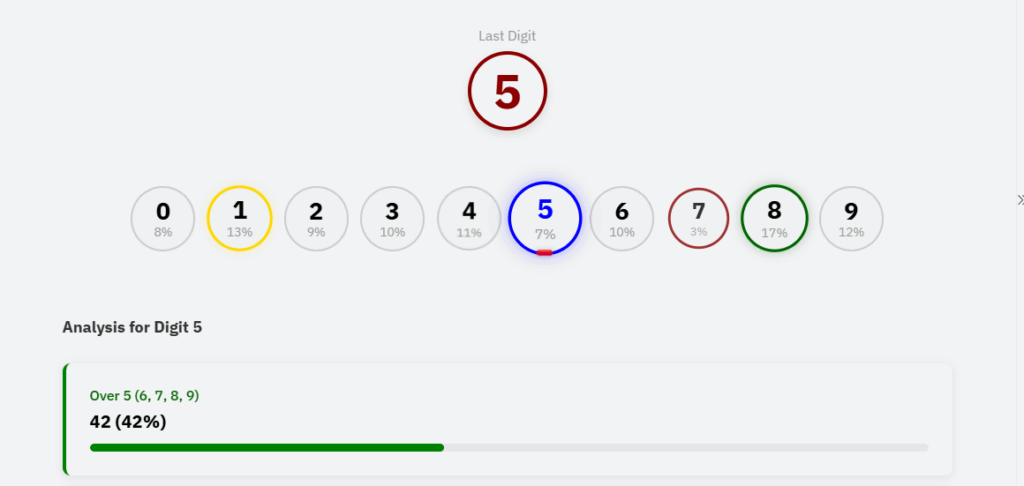
Start by capturing what matters.
Every session on Deriv should leave a paper trail. Pick one market and one contract (Rise/Fall is perfect), standardize your expiry (five minutes works well), and note the reason you entered, the exact ticket details, and one lesson you’ll carry forward. Keep screenshots. When your conditions repeat—trend pullback, range breakout, post-spike cool-down—you’ll have proof of what happens next for you, not for someone on YouTube. Knowledge that isn’t recorded can’t compound.
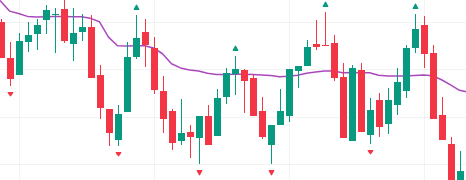
Convert notes into numbers you trust.
Binary options make the math simple. If the payout on your Rise/Fall ticket is about 80%, your break-even win rate isn’t 50%; it’s roughly 56% (specifically 1 ÷ 1.8). That one fact keeps you honest. Turn your log into expectancy with a single line: expected profit per $1 stake = (win rate × 0.8) − (loss rate × 1). If your measured win rate is 58%, that’s 0.58×0.8 − 0.42×1 = +0.044. In plain English, your process would expect about 4.4¢ per $1 stake, or $0.22 per $5—if you keep following the same rules. If the result is negative or wobbly, the fix isn’t bigger stakes; it’s cleaner rules.
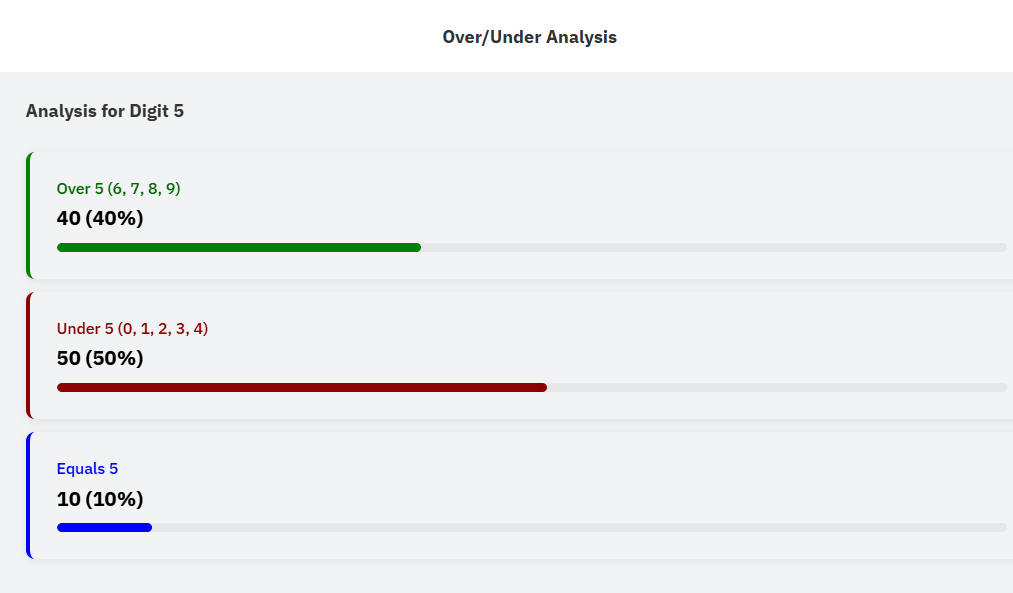
Prove the idea in demo before you chase returns.
Knowledge becomes profit only after it survives contact with time. Use Deriv’s Demo to run small, identical reps until the routine feels boring in the best possible way. Two short weeks is enough to learn a lot: days 1–2 just learn the buttons and avoid misclicks; days 3–5 log a consistent sample on one setup; days 6–7 review win rate, average payout, expectancy, and—most important—how often you actually followed your rule. The moment your adherence rises above your ego, your stats improve.
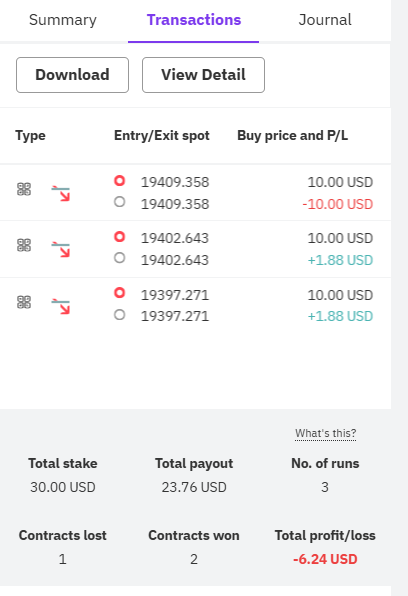
Let numbers, not nerves, decide position size.
Trade size is where many promising edges die. Keep stakes at one to two percent of balance while you’re proving your process. Set a daily stop—three consecutive losses or five total trades—and a weekly pause if you’re down five to seven percent. Skip Martingale; with payouts under 100%, one “catch-up” win can still leave you behind, and a normal losing streak escalates stakes to the moon. Knowledge compounds when you stay solvent.
Refine one lever at a time.
When you tweak everything at once, you learn nothing. Hold market, contract, and expiry constant and test a single filter—time window, a simple trend rule, or a “skip after spike” condition. Give it a fair run, then compare expectancy and rule adherence to last week. If it helps, keep it; if it doesn’t, remove it. Over a month, those small, measured tweaks become a personal playbook that fits your eyes and schedule.
Bridge from demo to live without breaking the loop.
The hand-off is simple: keep the same market, contract, expiry, and checklist, but cut your initial live size to the lowest you can tolerate and treat the first two live weeks like another experiment. If your adherence slips or your weekly limit is hit, drop back to demo, fix the leak, and try again. Profit is what remains after you subtract mistakes; plugging those leaks is the real “edge work.”
Automate your good habits.
A five-line pre-trade ritual—read the ticket out loud (contract, expiry, stake), breathe for ten seconds, confirm once, screenshot, log—removes most avoidable errors. A five-minute Sunday review—scan the journal, update win rate and expectancy, pick one focus for the week—keeps you improving. When the habits run on autopilot, your attention is free for the only things that move the needle: timing and discipline.
Final words
Profit is the by-product of a loop done well, not a moment of genius. Capture your decisions, translate them into simple numbers, and let those numbers reshape your plan. On Deriv, the fixed nature of binary options gives you the cleanest lab you’ll ever have—use it. Keep it simple, keep it steady, and let Money8gg be your reminder that progress, measured honestly, is the shortest path from knowledge to profit.
Education only. Not financial advice. Trading involves risk; follow local regulations and practice on a demo account before going live.
About the Author
Bretton Gitonga is a trading educator and the founder of Money8gg. With years of hands-on experience trading binary options and forex on platforms including Deriv, Bretton built Money8gg to give everyday traders access to honest, practical financial education. His focus is on disciplined strategy, realistic risk management, and helping beginners avoid the costly mistakes he learned from firsthand.
Have a question? Contact Bretton here.